
Last updated August 25, 2026
Free in-home measure and quote - PGT, CGI and CWS impact lines compared on your actual openings, style by style
Sliding glass doors
Impact garage doorsPGTCGI
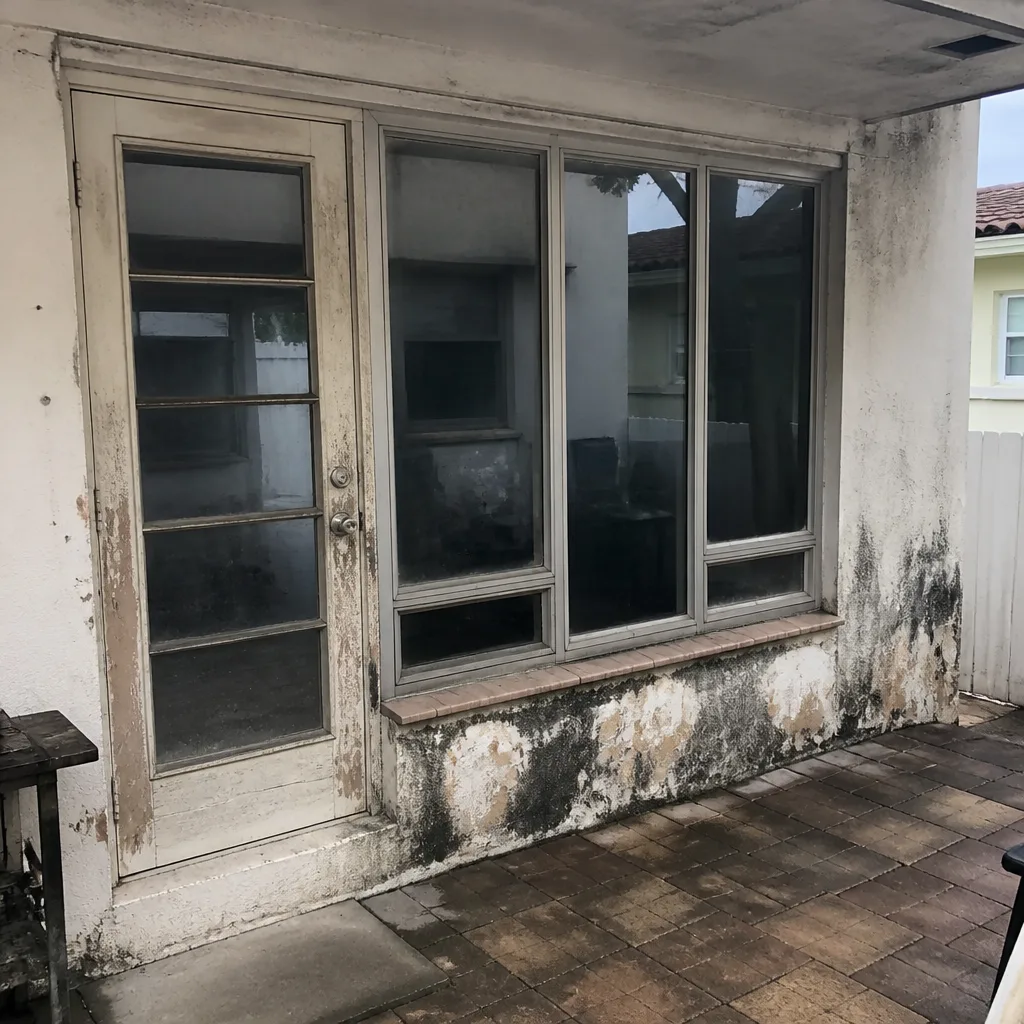 Before
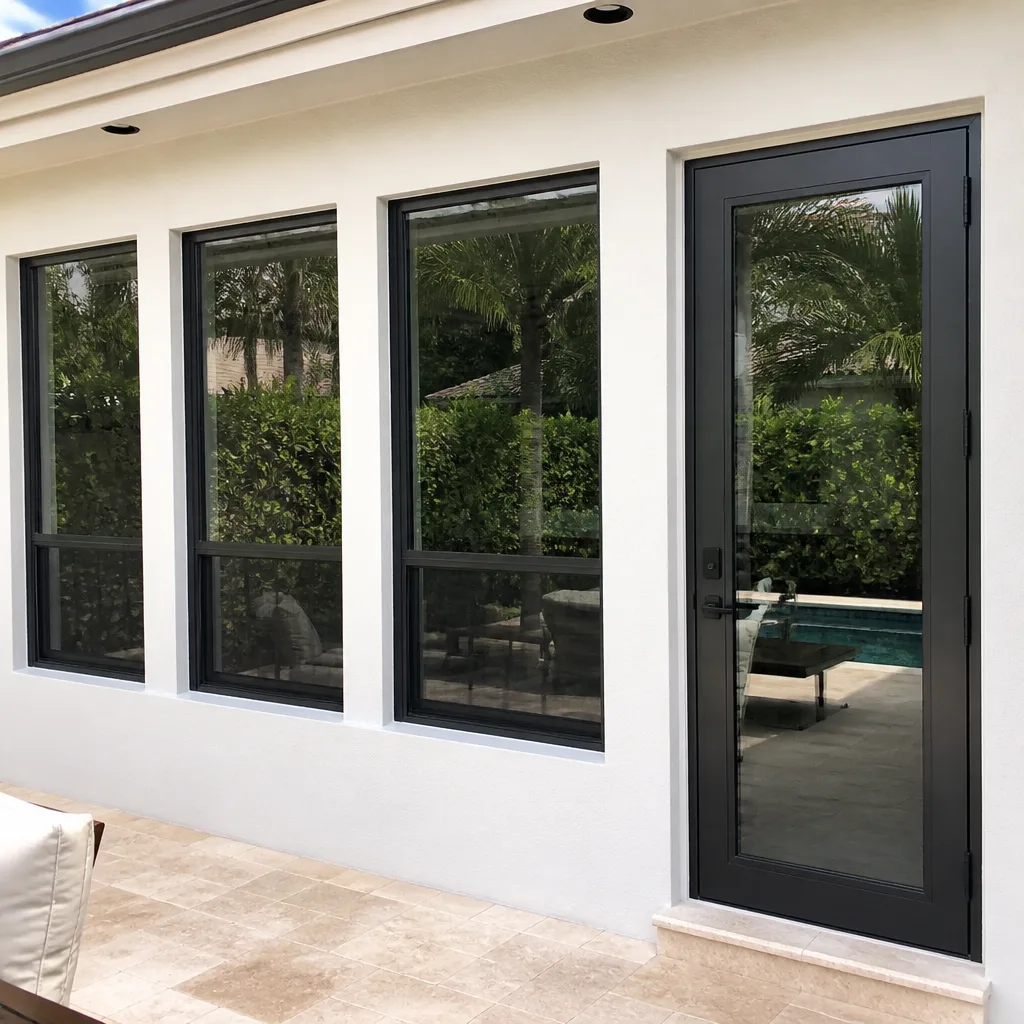 After
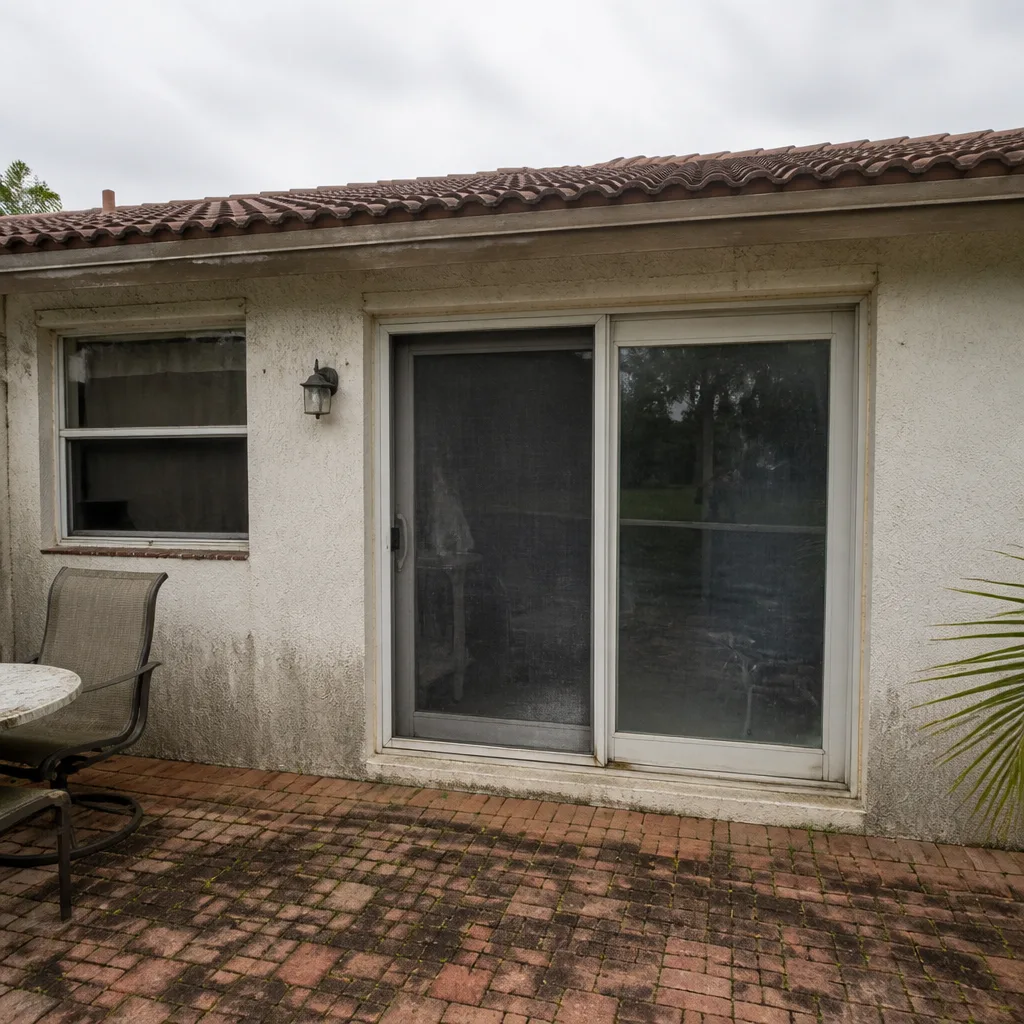 Before
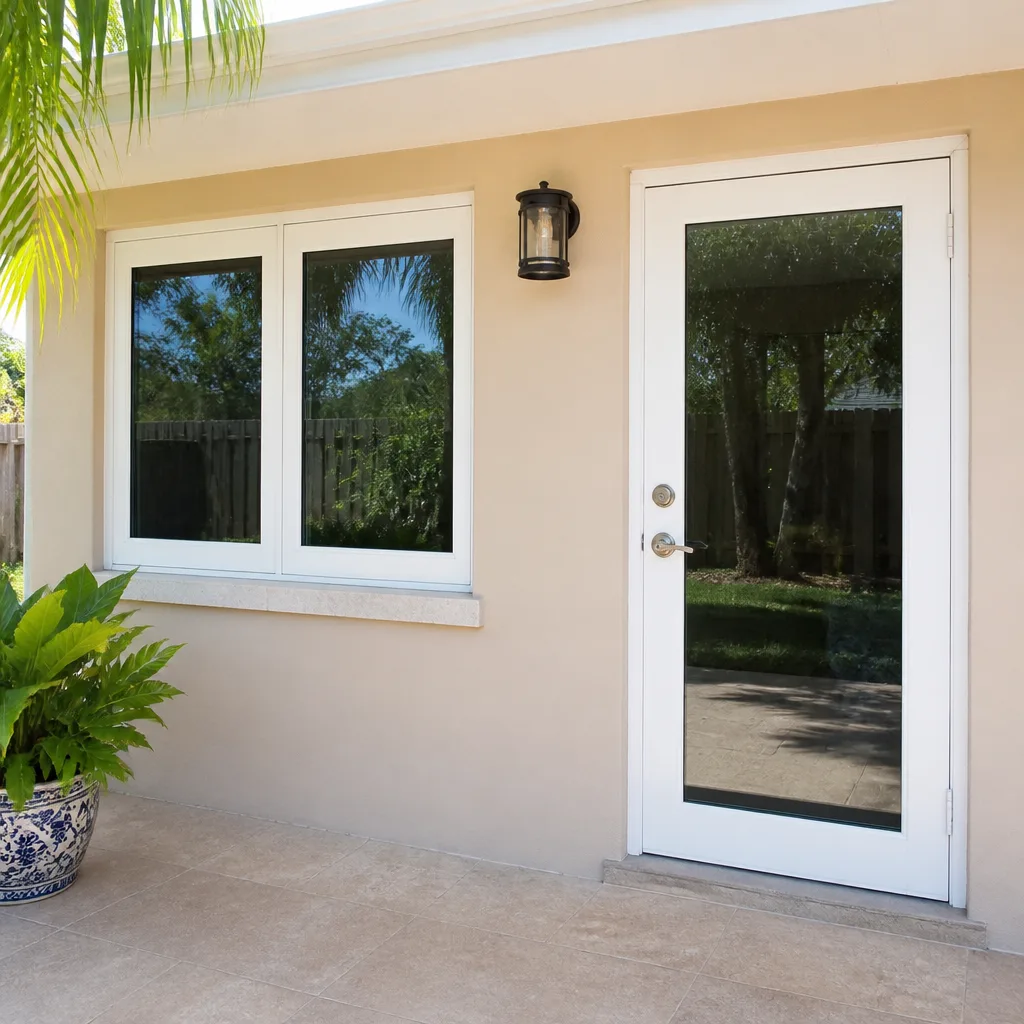 After
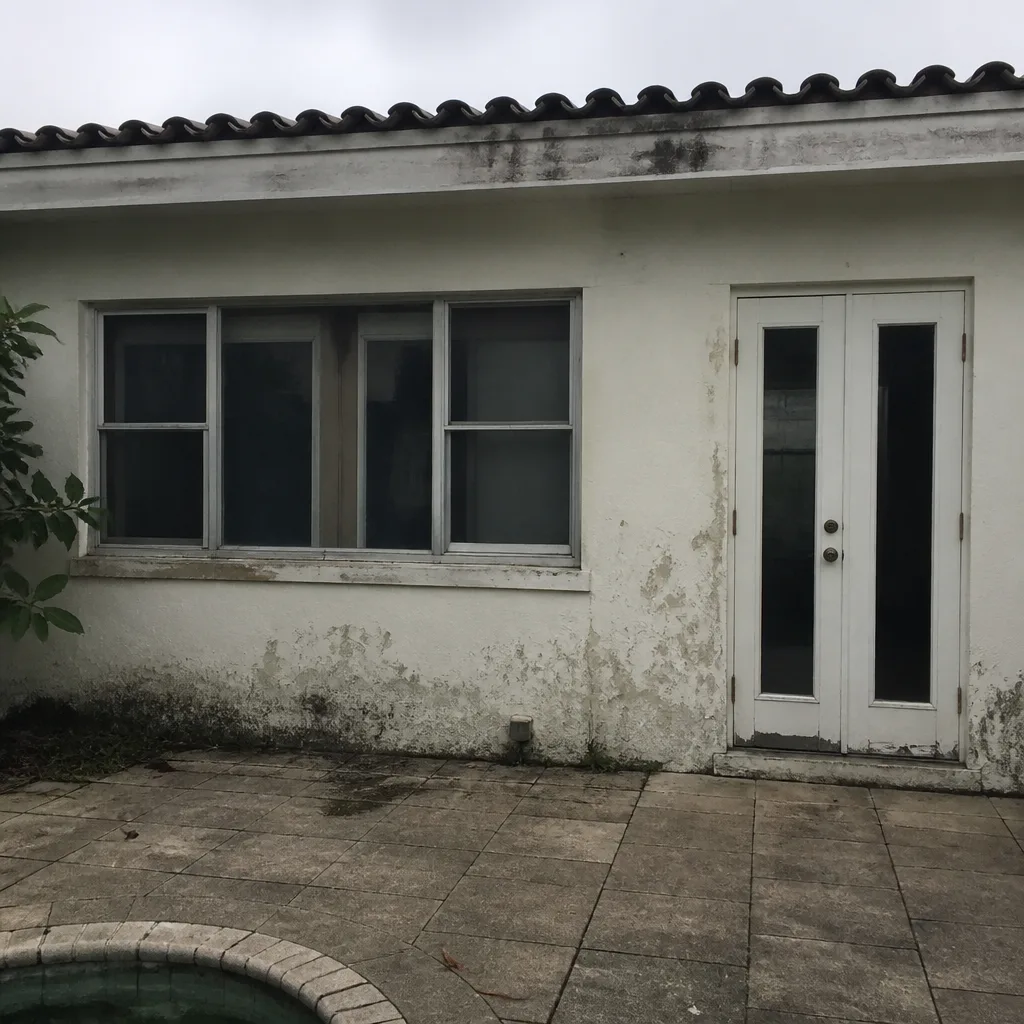 Before
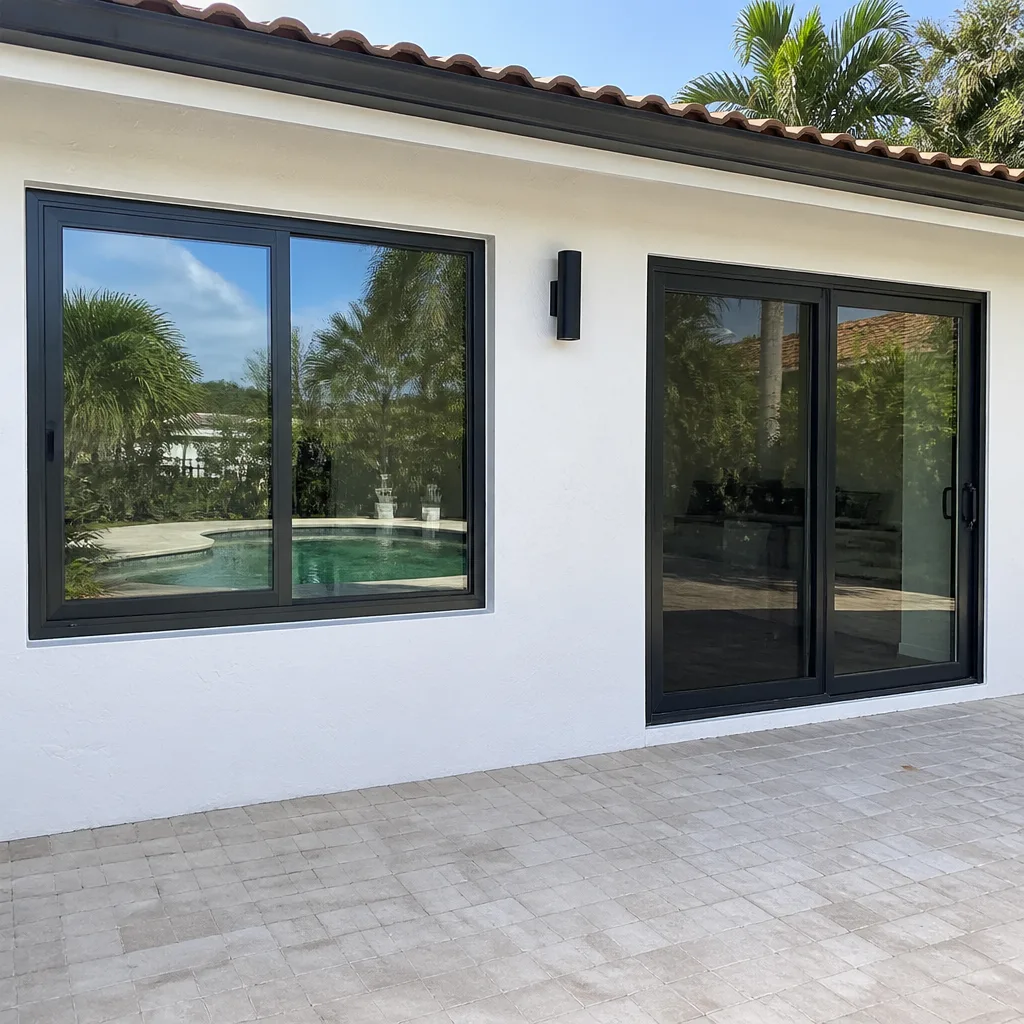 After
Windows & Doors Warning Signs: A Hollywood Homeowner’s Reference Guide
Most Hollywood homeowners don’t replace a window because it looks old. They replace it because it started lying to them: a room that won’t hold temperature, a frame that weeps during a summer squall, a lock that suddenly needs two hands to turn. What looks like a small irritation is often the first honest signal of a larger failure, and coastal Florida compresses the timeline on every one of them. This guide walks through the warning signs we’ve catalogued over 42 years of glazing work in Hollywood, what each one means, what it costs to ignore, and when the right move is a repair versus a full replacement.
Quick Answer
The most common window and door warning signs in Hollywood are fogged or hazy glass (a failed seal), frames that feel warm or cold to the touch, doors that bind or won’t latch in summer, visible daylight around the sash, condensation between panes, and a monthly electric bill that climbs for no other reason. Left unaddressed, these failures worsen quickly in South Florida’s heat, humidity, and storm cycles. TruePane Windows & Doors home has been serving Hollywood and can diagnose any of these conditions with a free estimate.
Table of Contents
- Condensation Between the Panes: The Fogged Seal Problem
- Binding Doors and Stubborn Locks: What the Heat Is Doing
- Drafts and Temperature Differences Around the Frame
- Daylight, Gaps, and a Frame That Pulls Away
- Rising Energy Bills: Hollywood’s Silent Window Tax
- Storm Readiness: Impact Windows and the Hollywood Code
- Frame Rot, Termites, and Moisture You Can’t See
- Age Alone: When the Warranty Has Already Expired
Condensation Between the Panes: The Fogged Seal Problem
Fogged glass is the most common warning sign we see in Hollywood, and it has nothing to do with the humidity outside. Double-pane and triple-pane windows are built with an inert gas, usually argon or krypton, sealed between two sheets of glass. That gas slows heat transfer. The seal around the perimeter keeps the gas in and moisture out. When the seal fails, the gas escapes quietly, and humid Florida air takes its place. The first thing a homeowner notices is a haze that won’t wipe off, because it isn’t on the surface, it’s between the glass.
On Hollywood’s east side, where ocean air carries salt, seal failures tend to arrive five to seven years earlier than they do inland. The salt works on the sealant the same way it works on everything else near the coast: slow, unrelenting, and indifferent to brand names. We’ve replaced fogged units in Hollywood Lakes homes that were only six years old, and we’ve seen 20-year-old units in Emerald Hills that were still clear. The difference is rarely manufacturer quality. It’s exposure.
Here’s what a failed seal actually costs you, in order of appearance:
- Lost insulation value. Once the argon is gone, the window insulates only as well as a single pane. In August, that means heat moves through the glass and your air conditioner works harder.
- Permanent haze. The condensation leaves mineral deposits on the inside of the glass. Even after the moisture dries, the film remains. There is no cleaning it off.
- Weakened glass. Some homeowners assume a foggy window is still structurally sound. That’s usually true, but the failed seal means the unit is no longer doing the job it was built for, and the haze will only get worse.
The fix is replacement of the insulated glass unit, not the whole frame. In most cases, the sash can be removed, the old unit swapped out, and the window reinstalled in one visit. The cost in Hollywood typically runs between $180 and $450 per unit, depending on size, glass type, and whether the window carries a low-E coating designed for South Florida’s solar gain.
Binding Doors and Stubborn Locks: What the Heat Is Doing
A door that scrapes the frame in July and swings freely in January is not a door being difficult. It is a door telling you that something is moving: the frame, the slab, or the house itself. In Hollywood, where the wet season and dry season push and pull at every wood and composite component, seasonal binding is common. What matters is whether it’s routine expansion or a sign that the door was never set true in the first place.
We replace and realign sliding patio doors in Hollywood every week, and the most frequent culprit is a door installed slightly out of level years before. The original installer might have shimmed it close enough and walked away. The homeowner lives with a latch that needs a little lift, then a little more, then two hands. By the time we’re called, the rollers are worn unevenly, the track has a groove on one side, and the strike plate has been filed down twice by a handyman trying to make it work.
Here’s how to read the warning signs on a sliding or hinged door:
- The door binds at the top or bottom, not both. That means the frame is out of square, not that the slab has swollen. A door that’s out of square will only get worse as the house continues to settle.
- The lock needs force to engage. A properly hung door should latch with a thumb. If you’re lifting, shoving, or jiggling the handle, the alignment is off.
- The door moves on its own. A sliding door that creeps open or closed is on an unlevel track. Gravity is doing the work, and the rollers are taking uneven wear you can’t see until the door jumps the track.
If a door binds every summer, that’s a door that was measured in winter. The fix is a realignment, and in some cases, replacing the slab with one hung to the actual dimensions of the opening. Done right means measuring every opening twice and not cutting a single corner off the slab until the numbers agree.
Drafts and Temperature Differences Around the Frame
Stand next to a closed window on a hot afternoon and hold your hand six inches from the glass. If you feel heat radiating, that’s normal, especially on west-facing windows in Hollywood where the afternoon sun is relentless. If you feel air moving, that’s not normal. Moving air means a gap somewhere: between the sash and the frame, between the frame and the rough opening, or along the weatherstripping that has compressed, cracked, or fallen out entirely.
Drafts are not always obvious. In the dry months, a small gap lets air move without much fuss. In the wet months, that same gap lets humid air condense on the interior surfaces, and that’s when homeowners notice the telltale beads of water at the base of a window or along the top casing. We’ve been in Hollywood homes where the only visible sign of a draft was a slight darkening of the paint along one edge of the frame, and behind that paint was a gap you could push a screwdriver through.
What to check, in order of likelihood:
- Weatherstripping on the moving sash. This is the most common draft source. Over five or six Hollywood summers, weatherstripping dries out and loses its spring. You should be able to see a uniform line of contact around the entire sash when the window is closed.
- The meeting rail. On double-hung windows, the two sashes meet in the middle. If the locks don’t pull them tightly together, air moves through the center of the window.
- The rough opening. If the window was installed without proper foam or backer rod insulation around the frame, air moves through the wall cavity and exits around the trim. This requires removing the interior casing to diagnose and fix.
- The threshold of an exterior door. A worn or improperly adjusted threshold lets air, water, and insects through the bottom of the door. In Hollywood, it also lets in the occasional lizard, which tends to get a homeowner’s attention.
One note about modern building requirements: Hollywood’s energy code expects a certain airtightness from a new installation. An older window with compressed weatherstripping might have met code in 1995 and fails it entirely today. The fix isn’t always replacement. Often it’s new weatherstripping, a sash adjustment, and replacing the insulation around the frame if the opening is being worked on anyway.
Daylight, Gaps, and a Frame That Pulls Away
If you can see daylight around a closed door or window, you are looking at a failure that has already graduated from comfort issue to structural concern. Light means a gap. A gap means air, water, insects, and eventually rot. In a coastal city like Hollywood, where driving rain hits the east-facing walls during a summer storm, a daylight gap around a window or door is a direct path for water into the wall cavity.
The most severe version of this warning sign is a frame that has pulled away from the house. You can usually see it from outside: a line of caulk that has cracked and separated, a trim piece that no longer sits flush against the stucco or siding, a shadow where there used to be a seal. This is not a caulking problem. It is a sign that the original installation was never properly flashed or anchored, and the house has been moving around the opening ever since.
In Hollywood Lakes and older sections of the city, we find wooden frames that have been soaking up water for years behind a failing caulk joint. The homeowner sees a cosmetic crack. The reality is a sill that crumbles when you press a screwdriver into it. By the time daylight or a visible gap appears, the fix is rarely as simple as recaulking. It means pulling the unit, repairing or replacing the buck, flashing the opening properly, and reinstalling with new anchors.
For homeowners who want to check for gaps they cannot see, here’s a simple test: on a bright day, turn off the interior lights and stand inside looking at the edges of every window and door. If light gets around the sash or frame, air and water are getting through too. A dollar bill slid between the closed sash and the frame should meet mild resistance. If it slides freely, the seal is compromised.
Rising Energy Bills: Hollywood’s Silent Window Tax
Florida Power & Light customers in Hollywood pay some of the highest summer rates in the state, and single-pane or failed double-pane windows are a direct and measurable contributor. The Department of Energy estimates that windows account for 25 to 30 percent of residential heating and cooling energy use. In a climate where the air conditioner runs nine months a year, that number skews higher. A house full of failed seals and worn weatherstripping is effectively paying a monthly tax of ten to fifteen percent on the electric bill.
Let’s put that in dollars. A typical Hollywood home with 2,000 square feet of conditioned space and an average summer FPL bill around $280 could be spending $28 to $42 each month, every month, because the windows are not doing their job. That’s $336 to $504 a year. Over five years, it approaches the cost of replacing the worst-performing windows in the house.
Energy loss shows up in specific patterns:
- Rooms on the west or south side run hotter than the rest of the house. Late afternoon sun on unprotected glass creates a solar gain problem that no amount of air conditioning can fully offset.
- The air conditioner cycles more often than it used to. A unit that used to run 20 minutes per hour and now runs 35 is compensating for air movement you may not feel at the window itself.
- Bills spike in months with no change in occupancy or thermostat settings. That is the signature of a performance failure, not a lifestyle change.
- Not all impact windows are equal. Different designs pass different tests. The Miami-Dade County product approval is the benchmark for a reason: it involves a large-missile impact test that carries the most demanding wind load conditions. Broward County accepts Miami-Dade approved products.
- Impact windows also quiet the street. The same lamination that holds glass together in a storm reduces outside noise noticeably. In a city where the traffic on Federal Highway or I-95 is a constant background, that’s a real benefit.
- Insurance discounts are real but not automatic. Many insurers in Hollywood offer premium reductions for homes with full impact protection, but the discount requires documentation: product approvals, permits, and a final inspection. We register both manufacturer warranty layers in writing and make sure the paperwork is in your hand, but the insurance discount is between you and your carrier.
- Impact windows have a lifespan. The interlayer does not last forever in the South Florida sun. We see units from the early 2000s where the lamination is beginning to haze or the frame’s finish is failing. A 20-year-old impact window may no longer meet the testing standard that it passed when new.
- Peeling paint that won’t stay fixed. If you scrape, prime, and repaint a sill and the paint blisters again within a year, there is moisture moving through the wood from behind.
- Soft spots when you press with a screwdriver. Rotting wood loses its resistance. A healthy sill should be hard. A rotted one will dent or crumble.
- Mud tubes or small piles of sawdust. Termites leave visible evidence. Mud tubes on a foundation wall near a window or a door, or a fine sawdust-like material at the base of a frame, are both reasons to have the opening inspected.
- A musty smell that appears after rain. That is the smell of wood that has been wet for a while. It doesn’t dry out on its own in Hollywood’s humidity.
- Seals fail on their own schedule. The window doesn’t have to look bad to have lost its gas fill. The only way to know is with an energy audit or a thermal inspection, and by the time the fog appears, the unit has been underperforming for months or years.
- Hardware gets harder to replace. A 25-year-old window from a manufacturer that has changed hands twice may have no available replacement parts. A simple broken latch becomes a full sash replacement, and sometimes a full window.
- The building code has moved on. What was legal to install in 1990 is often illegal to install today. If the time comes to make a repair, you may discover that the repair cannot be permitted because the unit no longer meets current code. At that point, replacement is not a choice, it’s the only path.
Replacing a window with a modern low-E unit appropriate for the South Florida climate zone makes an immediate difference. We often quote Hollywood homeowners on two or three different manufacturer lines side by side, explain the solar heat gain coefficient of each, and let them see the numbers on paper. Simonton, Milgard, and Jeld-Wen all make South Florida-appropriate glass packages, and the differences between them are worth understanding before you sign anything. For a square deal, you should know exactly what you’re paying for and what it will do to the bill.
Storm Readiness: Impact Windows and the Hollywood Code
Hollywood sits in Broward County’s high-velocity hurricane zone, and that fact governs what can and cannot be installed in any opening in your home. The Florida Building Code requires that new windows and doors either be impact-rated or protected by a code-approved shutter system. An existing home with non-impact glass and no shutters is a house that will not pass an insurance inspection, and in today’s market, that can mean a canceled policy or a premium that climbs with every storm season.
Impact windows are not just thick glass. They are a system: laminated glass bonded to an interlayer that holds the pane together when it shatters, set into a frame engineered to remain in the opening during wind and projectile impacts. Manufacturers like PGT and CGI build their entire product lines around the South Florida market, and the difference between an impact-rated unit and a standard unit is not visible to the naked eye. It has to be confirmed by the label, the testing paperwork, and the product approval number filed with the county.
Here is the breakdown of what a Hollywood homeowner should know:
If you don’t know whether your current windows are impact-rated, check the label on the edge of the glass or on the frame. If there is no label, assume they are not, and call a licensed contractor for an assessment before the next insurance renewal comes up.
Frame Rot, Termites, and Moisture You Can’t See
Wood window frames in Hollywood live in a hostile environment. The heat and humidity of the wet season, the salt air east of Federal Highway, and the relentless sun on west-facing walls all work against a material that was never naturally suited to this climate. When wood frames rot, the failure is always driven by water, and the water always gets in through a seal that failed first.
Termites follow moisture. A wet window frame is an invitation, not just to rot, but to subterranean or drywood termites that find the soft, wet wood an easy place to establish a colony. We have opened walls in Hollywood homes during window replacements and found termite damage that extended six feet from the window opening, invisible from both the interior and the exterior until the wall was opened. The window frame was the entry point. The water damage was the attractant.
What to look for, on any wood-framed window or door in your home:
The repair path depends on how far the rot has traveled. A rotted sill can sometimes be cut out and replaced with a pressure-treated or composite piece. A rotted jamb or header often means the entire window needs to come out, the framing repaired, and the opening rebuilt before the new unit goes in. In an older Hollywood home, we budget for the unknown because the only way to know what’s inside the wall is to open it.
Age Alone: When the Warranty Has Already Expired
Most residential windows installed in Hollywood during the building booms of the 1970s through the 1990s are now past their useful life. An aluminum single-pane window from 1985 might still open and close, but it was built for a different climate, a different energy code, and a different set of expectations about what a house costs to run. Age alone is a warning sign, even when the window appears to be doing its job.
Manufacturer warranties are typically written for ten to twenty years. A window that has passed that mark is no longer covered for seal failure or hardware defects, and the probability of a failure climbs every year. In coastal Hollywood, where salt and heat accelerate every failure curve, we tell homeowners to start planning for replacement when their windows pass the twenty-year mark, even if they haven’t fogged, rotted, or pulled away yet.
Why age matters, even without visible symptoms:
Marvin, Milgard, and Jeld-Wen all make current product lines with warranties that back up the quality claims. When we compare quotes for a Hollywood homeowner, we show the warranty terms on paper, side by side with the price, because a ten-year prorated warranty and a twenty-year non-prorated warranty are not the same product, and you should know exactly where you stand.
Common Mistakes to Avoid
- Caulking over a structural gap. Caulk is a sealant, not a structural adhesive. If the frame has pulled away from the house, a fresh bead of caulk covers the problem for one season and lets the water keep moving behind it.
- Replacing glass without addressing the frame. A new insulated unit in a rotted or warped frame will fail the same way the old one did. The frame and the glass have to work together.
- Choosing the lowest bid without comparing the scope of work. A Hollywood window replacement quote that’s $2,000 cheaper than the next one is usually omitting something: flashing, permit fees, rot repair, stucco patching. What looks like savings becomes a change order.
- Assuming all impact windows are the same. Product approvals, design pressures, and framing systems vary significantly. A window that passed a small-missile test is not the same as one that passed Miami-Dade’s large-missile protocol.
- Putting off a fogged window because it still opens. A failed seal isn’t a cosmetic problem. Every month it stays in place, the house pays for it on the electric bill, and the haze becomes permanent.
- Ignoring a door that binds in summer. Seasonal binding in Hollywood is a sign that the door was never hung true. It doesn’t fix itself, and the hardware wears unevenly every time you force it.
- Signing a contract without seeing warranty paperwork. If the warranty isn’t registered in writing with your name and property address, it doesn’t exist. We register both manufacturer warranty layers before we leave the driveway, and we hand you the paperwork. Anything less is a promise, not a warranty.
When to Call a Professional
Some homeowners are comfortable replacing weatherstripping, adjusting a strike plate, or recaulking a window on a ground-floor accessible wall. Those are maintenance tasks, and a careful homeowner can do them well. But if you see daylight around a closed window, condensation between the panes, a frame that has separated from the wall, a door that jumps its track, or any sign of wood rot or termite activity, stop. These are not weekend projects. The fix requires pulling the unit, assessing the rough opening, repairing the framing, flashing correctly for South Florida’s wind-driven rain, and reinstalling with the right anchors. One wrong cut into a wall cavity in Hollywood can mean a water intrusion that goes unnoticed until the next storm season. TruePane Windows & Doors offers free estimates in Hollywood and can assess any of these conditions on site, call (863) 334-2933 to schedule.
Frequently Asked Questions
Window replacement in Hollywood typically costs $600 to $2,800 per opening, installed, depending on size, frame material, impact rating, and manufacturer line, and a full-house project on a 2,000 square foot home usually runs $12,000 to $35,000. The wide range is real: a standard aluminum non-impact window is a different product than a Miami-Dade approved impact window from PGT or CGI. Call (863) 334-2933 for an exact quote, estimates are free and we put the numbers on paper.
No, a fogged window will not fix itself. The seal has failed, the inert gas has escaped, and the moisture inside the unit will leave permanent mineral deposits on the glass even after it dries. The only repair is replacing the insulated glass unit, which in most cases can be done in a single visit at a lower cost than replacing the entire window.
Hollywood is in Broward County’s high-velocity hurricane zone, which means any new window or door you install must be impact-rated or protected by a code-approved shutter system. If you’re repairing or replacing an existing opening, you need to meet the current Florida Building Code, and your insurance carrier may require documentation of full impact protection.
Seasonal binding on a sliding door means the frame or track was installed slightly out of level, and the humid summer months push the door components just far enough to reveal it. The fix is a proper realignment, not forcing the door, and the rollers may need replacement if they’ve been wearing unevenly.
In Hollywood’s salt air, heat, and humidity, a quality window installed correctly can last 25 to 35 years, but a budget window or a poorly installed one may show seal failure, frame rot, or hardware problems within ten. Coastal exposure shortens every window’s lifespan relative to the same product installed inland.
That depends on the age and condition of the existing windows, but if they were all installed at the same time, they will tend to fail around the same time. Phasing the work means paying for permits, mobilization, and setup labor multiple times, which ends up costing more than a single project. Call (863) 334-2933 and we’ll give you an honest assessment of what needs to happen now and what can wait.
The Bottom Line
Windows and doors in Hollywood talk plainly if you know how to listen. Fogged glass means a failed seal. A binding door means an out-of-true installation. Daylight around a frame means the weather barrier has already been compromised. None of these conditions gets better with time, and all of them get more expensive the longer they’re ignored. The right approach is the same one we’ve followed for over 42 years: diagnose honestly, quote on paper, do the work once, and stand behind it. If the pane is not true, the job is not done. If you’re seeing any of the warning signs in this guide, call us and we’ll be there when we say.
Written by the team at TruePane Windows & Doors.
Six Reasons Homeowners Choose TruePane Windows & Doors
Impact systems engineered to design pressures up to +/-100, matched to your wind zone - your openings hold when the storm arrives.
Low-E insulated impact glass from our manufacturer lines commonly cuts monthly cooling bills 20-30%.
Laminated impact glass shuts out up to 40% of outside noise - traffic, neighbors, weather.
Monitoring services run $30-90 a month. Laminated impact glass resists forced entry around the clock, with no subscription.
Florida homeowners average around 25% savings on the windstorm portion of their policy after protecting every opening - some homes qualify for more.
A full impact package upgrades curb appeal, buyer confidence and appraised value in one project.