
Last updated August 27, 2026
Free in-home measure and quote - PGT, CGI and CWS impact lines compared on your actual openings, style by style
Sliding glass doors
Impact garage doorsPGTCGI
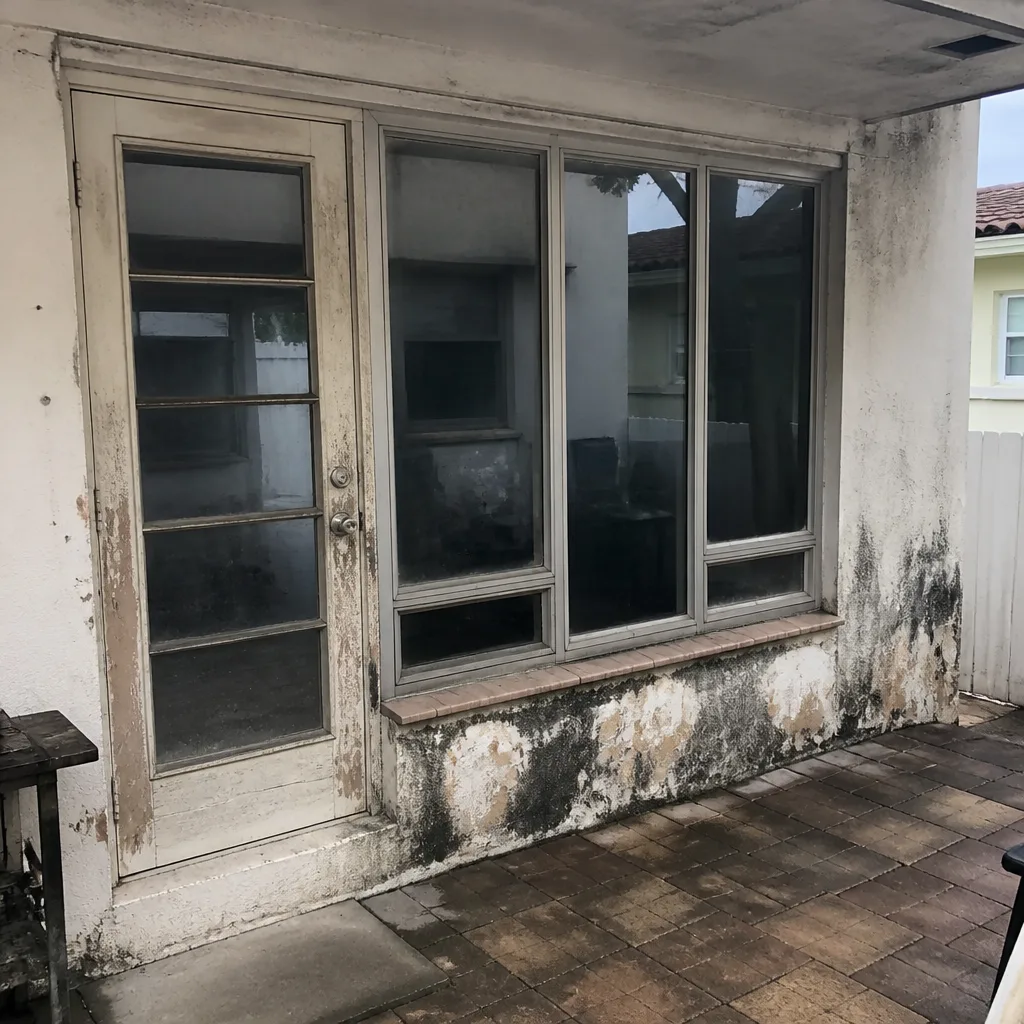 Before
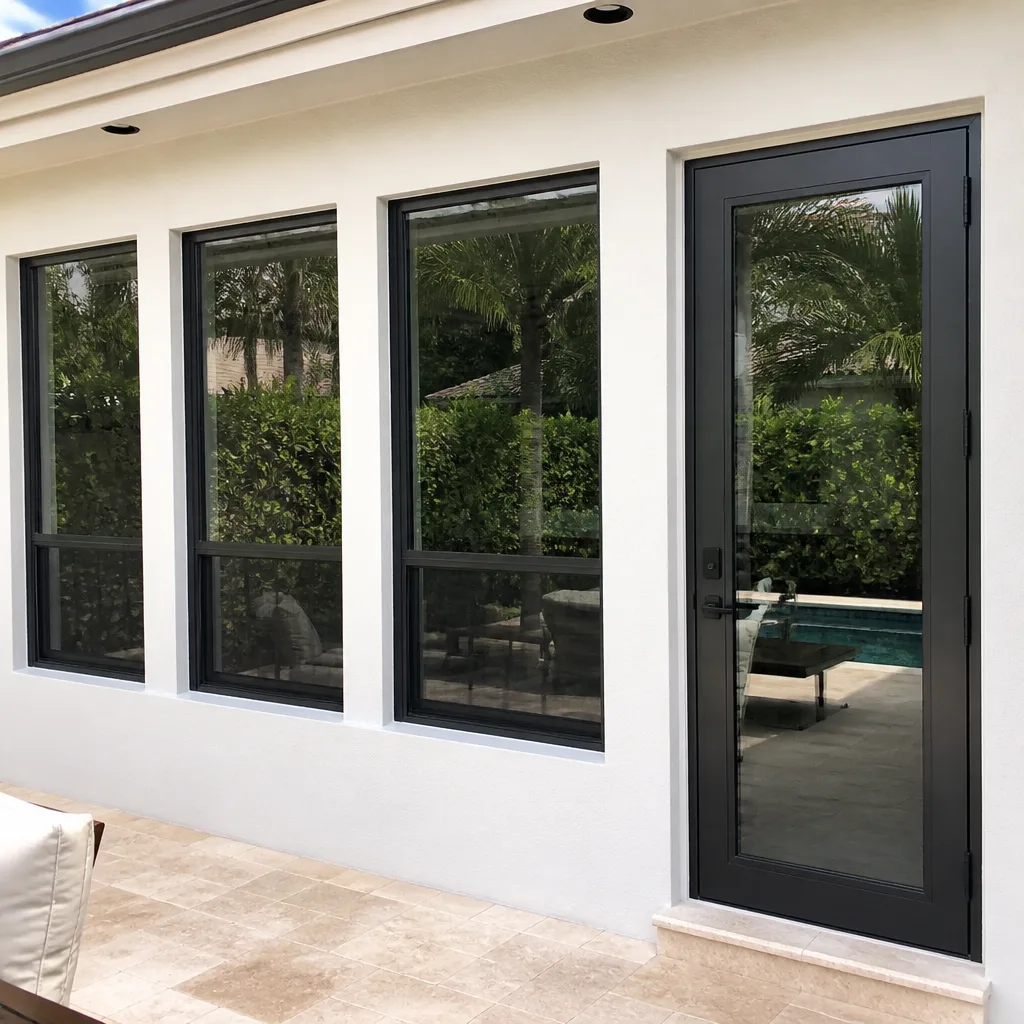 After
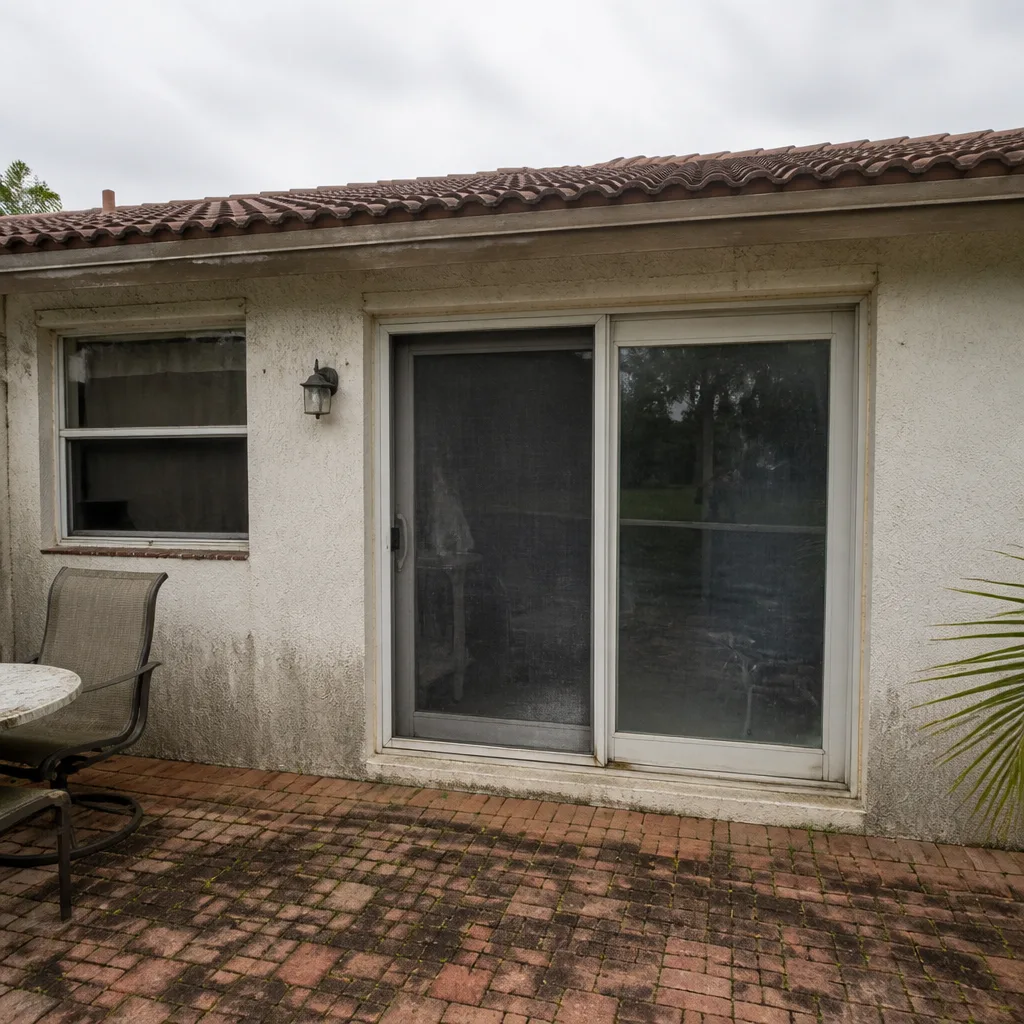 Before
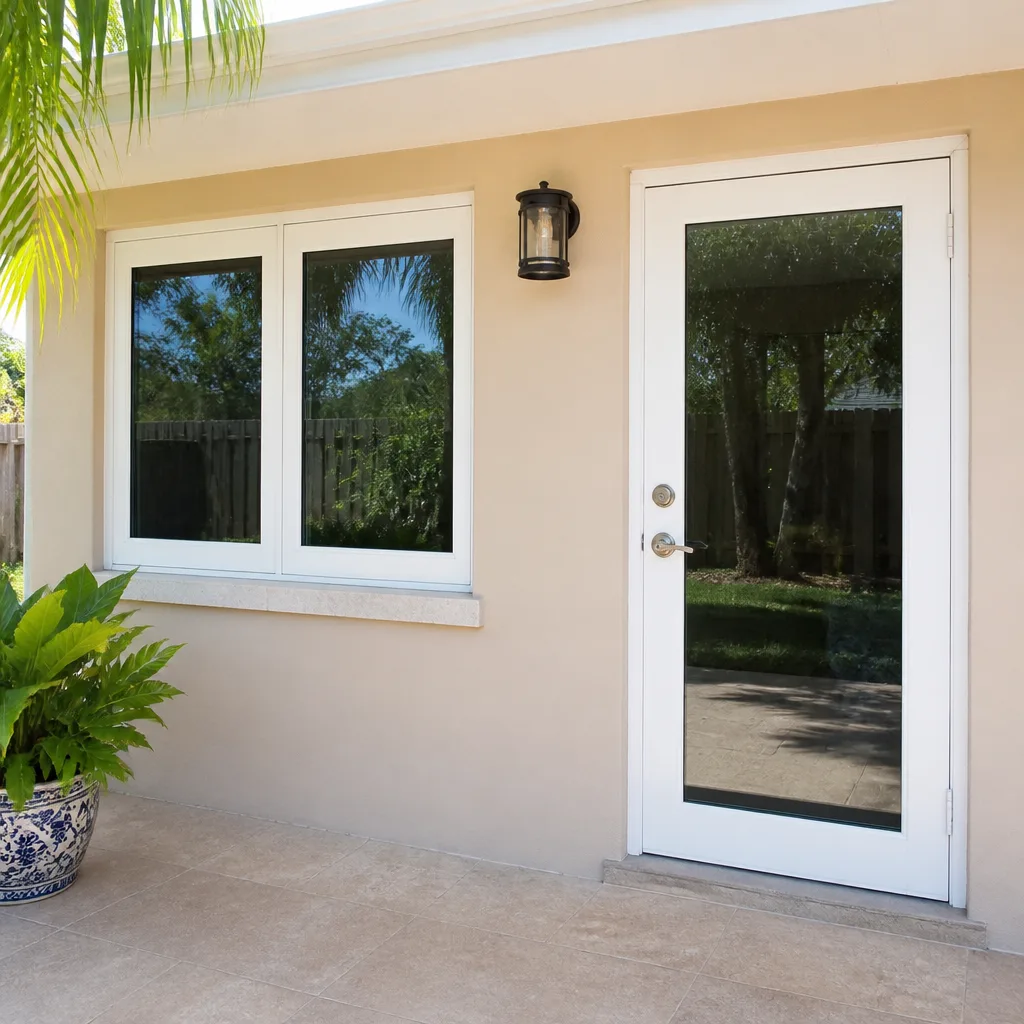 After
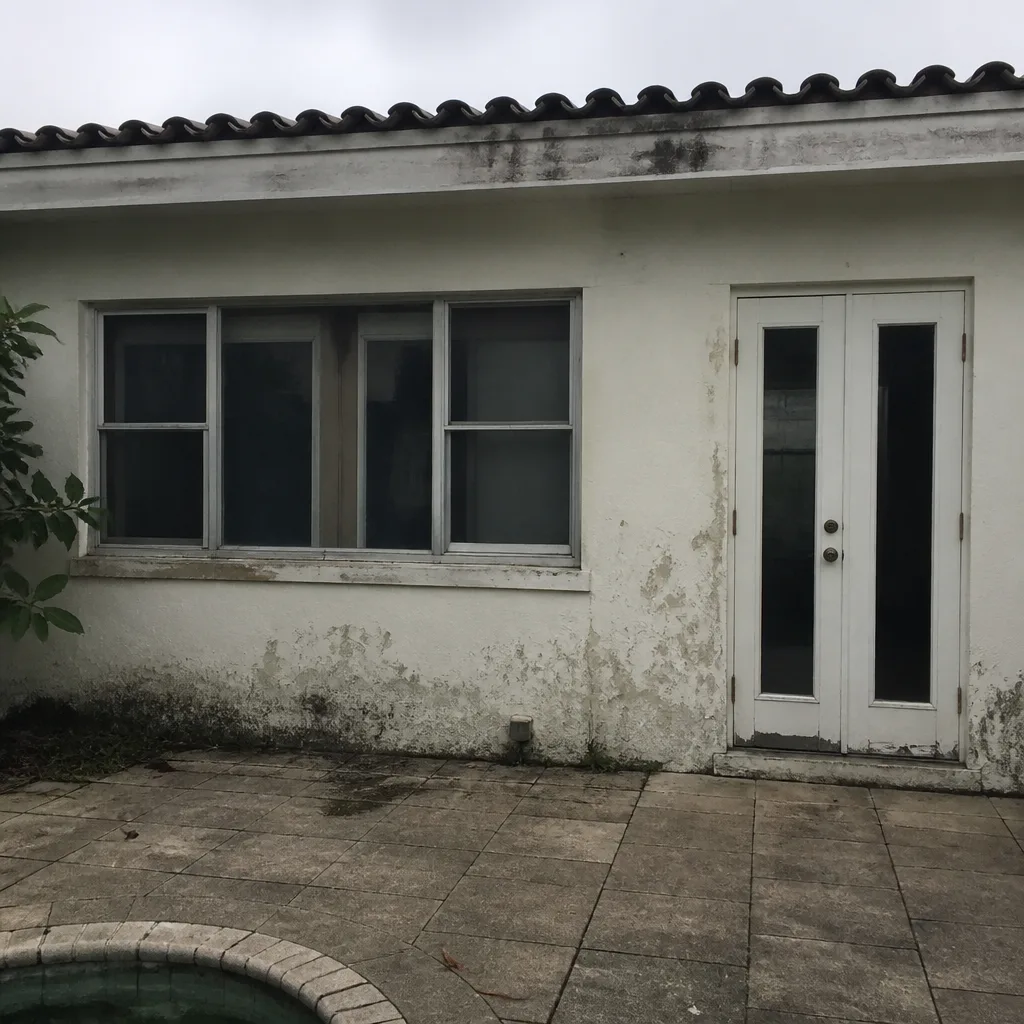 Before
 After
DIY vs Professional Windows & Doors: The Hollywood Homeowner’s Decision Guide
Here’s a number that surprises most homeowners we sit across from: a poorly flashed window installed by a well-meaning DIYer leaks an average of 14 gallons of water into the wall cavity per year before anyone notices the drywall staining. By the time you see it, the framing is already rotting. This guide walks you through the real cost difference between doing it yourself and hiring a professional in Hollywood, Florida, what the building code actually requires here, which jobs a careful homeowner can handle, and which ones you should never touch without a licensed crew. You’ll learn what we’ve learned over four decades of watching both approaches play out.
Quick Answer
For most window and door replacements in Hollywood, hiring a licensed professional is the smarter financial decision once you factor in warranty protection, code compliance, and the cost of fixing mistakes. Small tasks like re-caulking, cleaning tracks, and replacing weatherstripping are reasonable DIY projects. Full window replacement, impact-rated installations, and any door that needs to be re-hung are professional jobs because Hollywood’s coastal building code requires specific product approvals, and manufacturer warranties are void if installation doesn’t meet their published standards.
Table of Contents
- What DIY Actually Costs in Hollywood
- What Professionals Charge and Why
- Hollywood Building Code and Permit Reality
- Jobs a Careful Homeowner Can Handle
- Jobs You Should Never DIY
- The Warranty Trap Nobody Explains
- How Hollywood’s Climate Punishes Bad Installs
- Quality Checks Before You Pay Any Installer
What DIY Actually Costs in Hollywood
The sticker price on a window from a big-box store looks like a bargain until you add everything the sticker doesn’t include. We’ve walked into Hollywood homes where a homeowner spent $400 on a window, then $280 on flashing tape, sealant, shims, and a rented brake, then lost a weekend, then paid us $1,100 to pull it out and re-set it because the sill wasn’t sloped and water pooled against the frame.
Here’s a realistic breakdown for a standard 36-by-48-inch single-hung window replacement in Hollywood, assuming the homeowner already owns basic tools:
- Mid-grade window from a retail supplier: $280 to $450
- Flashing tape, sealant, backer rod, shims, fasteners: $90 to $160
- Disposal of the old window (Hollywood’s sanitation won’t take construction debris curbside): $45 to $85 per trip to the transfer station
- Permit and inspection fees (Broward County schedule): $85 to $180, depending on the number of openings
- Time: one full day per window for a first-timer, often two
When we price a single window replacement in Hollywood, the labor typically falls between $200 and $400 per opening for a standard retrofit. That means many homeowners save only $100 to $250 doing it themselves, and they assume every warranty and code risk in exchange. If the window is impact-rated or the opening needs a full-frame tearout, the DIY math gets worse: the materials cost more, the installation tolerances are tighter, and the inspection is more demanding.
What Professionals Charge and Why
Professional window and door installation in Hollywood runs roughly $75 to $125 per hour for labor, with most standard retrofit windows billed as a flat rate between $200 and $450 per opening. A full-frame replacement, where the old window is removed down to the studs and the new one is flashed and sealed from scratch, runs $450 to $900 per opening. Door installations have a wider spread: a pre-hung exterior door starts around $350 for labor, while a multi-point locking door with sidelights can run $900 to $1,600 for installation alone.
That money buys more than labor. It buys the burden of a bad measurement. We send technicians who measure every opening twice because a window ordered a half-inch out of square won’t seal, and the manufacturer will not accept a return on a custom-sized unit. It buys correct flashing details: the sill pan, the head flashing, the jamb flashing shingled in the right order so water drains out, not in. It buys load-bearing awareness when a door opening needs a larger header because the existing one was undersized in 1972. And it buys the inspection: we pull the permit, we meet the inspector, and we fix anything that gets flagged without charging you more.
We’re also an authorized installer for more than a dozen manufacturer lines, including. That matters because these manufacturers train installers on their specific systems and will only honor claims when the installation followed their published methods.
Hollywood Building Code and Permit Reality
Hollywood sits entirely within the High Velocity Hurricane Zone. That’s not a marketing phrase. It’s a building code designation under the Florida Building Code that sets the wind-load requirements for every exterior opening. Windows and doors installed in Hollywood must be impact-rated or protected by shutters, and they must carry a Notice of Acceptance from Miami-Dade County listing the specific product by model number.
You cannot legally install a non-impact window in an existing opening in Hollywood unless it’s protected by an approved shutter system. Big-box stores in the area sell windows that meet the energy code but not the impact code, and the packaging rarely makes the distinction clear. We’ve seen fines and failed final inspections from exactly that scenario.
Permits are required for any window or door replacement that changes the size of the opening or affects the structural integrity of the wall. A straight retrofit, where the new unit fits into the existing frame and no structural changes are made, sometimes qualifies for a simplified permit. But the inspector still has the right to check the anchoring schedule and the product approval documents. We pull permits on every job where the building department requires one, and we carry the Notice of Acceptance paperwork in the truck, not in a file back at the office.
Jobs a Careful Homeowner Can Handle
There are honest DIY tasks around windows and doors that save money and build skill. Here’s what we tell our Hollywood neighbors they can handle without us:
- Re-caulking exterior joints. Cut out the old bead with a sharp utility knife, clean the joint, and lay a continuous new bead of a high-quality polyurethane sealant. This is the single best preventive task a homeowner can do, and we recommend it every two to three years given Hollywood’s UV exposure.
- Cleaning and lubricating tracks. Sliding door and window tracks collect salt, sand, and pollen. Vacuum them, wipe with a damp cloth, and apply a dry silicone spray. Oil-based lubricants attract grit and make the problem worse.
- Replacing weatherstripping. Foam tape and vinyl bulb seals are available in standard profiles. Pull the old material, clean the channel, and press in the replacement. This is a 20-minute job per window that restores the compression seal.
- Tightening hardware. Loose handles, hinge screws, and striker plates respond to a screwdriver. If the screw no longer bites, remove it, pack the hole with a toothpick or matchstick dipped in wood glue, let it dry, and re-drive the screw.
- Seasonal inspection. Twice a year, check for cracked glazing, failing seals, and rust on hardware. Finding a problem early usually means a repair call instead of a replacement.
None of these tasks requires a permit in Hollywood, and none of them voids a manufacturer warranty. They’re simple, honest maintenance that extends the working life of the opening.
Jobs You Should Never DIY
Some jobs carry risks that no amount of YouTube preparation removes. These are the ones where we’d advise any Hollywood homeowner to put down the tools and pick up the phone.
- Impact window installation. A window that’s rated to stop a 9-pound 2-by-4 traveling at 34 miles per hour has to be anchored to the structure with a specific fastener schedule. Get one anchor wrong, and the window is the weak point in the wall. When the storm comes, you won’t get a second chance to test it.
- Any exterior door that needs to be re-hung. Doors bind, sag, and leak when the rough opening isn’t plumb or the hinges aren’t set flush. Splitting the difference on a door means a threshold that sits askew and a lock that fights the strike plate every time.
- Full-frame window replacement. Cutting out the old frame, installing a new one, and flashing it correctly is not an afternoon project. This is where we see the most expensive mistakes, including structural damage from removing a load-bearing header.
- Any glass larger than you can carry comfortably. A 48-by-72-inch insulated glass unit weighs more than 80 pounds. Drop it, and you’ve turned a $600 replacement into an emergency room visit and a much larger repair bill.
- Sliding door replacement. A sliding glass door is a large, heavy, moving assembly that must be square, plumb, and level to roll correctly. Homeowners who attempt this usually end up with a door that rolls hard from day one, and the tracks wear prematurely.
We’ve replaced more than a few DIY installations in Hollywood homes over the years. The pattern is consistent: the homeowner saved a few hundred dollars and spent the following months chasing drafts, leaks, or a door that binds in July when the humidity makes the wood swell.
The Warranty Trap Nobody Explains
Every manufactured window comes with a warranty. Very few homeowners understand what voids it. Manufacturers including Marvin and Milgard state in their published installation instructions that the warranty is conditioned on installation in accordance with those instructions. Read the fine print and you’ll find language about “proper flashing,” “manufacturer-approved methods,” and “trained installation personnel.”
Here’s the trap: a homeowner installs a window, it starts leaking a year later, and the manufacturer sends an inspector who finds the flashing was wrong. The claim is denied. The homeowner is out the window cost, the labor, and now the repair. We hear this story often enough that it’s a standard part of our consultation. When we install, we register both manufacturer warranty layers in writing before the technician leaves the driveway. The homeowner has a document stating the warranty start date and the coverage terms.
We also stand behind our workmanship for 90 days on every job, and we put that in writing. If something isn’t done right, we make it right. No paperwork fights, no arguing. That’s the promise, and it’s spelled out on every invoice.
How Hollywood’s Climate Punishes Bad Installs
Hollywood has a unique set of environmental stressors that test every window and door installation. Salt air, intense sun, and heavy afternoon thunderstorms are the big three, and they work together.
The UV index in Broward County averages 6 to 7 year-round, which breaks down sealants and warps vinyl frames faster than in most of the country. We recommend UV-stable polyurethane sealants and we avoid caulks that harden and crack within two seasons. The salt air from the Atlantic, just a few miles east of neighborhoods like Hollywood Lakes and Hollywood Beach, accelerates corrosion on hardware and fasteners. We use stainless steel or coated fasteners rated for coastal exposure, not the zinc-plated fasteners that come with most retail kits.
And then there’s the rain. Hollywood averages more than 60 inches of rainfall annually, mostly in afternoon downpours that overwhelm gutters and drive water sideways against the walls. A properly flashed window drains that water out and away. A poorly flashed one channels it into the wall cavity. We’ve opened walls in Hollywood homes where the insulation was black with mold behind a window the homeowner installed three years earlier, and they never saw a leak because the water was running inside the wall.
The same logic applies to doors. An exterior door in Hollywood needs a full sill pan, not just a bead of caulk under the threshold. It needs backer rod and sealant at the brickmold joints. It needs a drip cap at the top. Skip any of these, and the first hard storm finds the gap.
Quality Checks Before You Pay Any Installer
Whether you hire us or another company, we want you to know what a correct installation looks like. Here’s a checklist we give our Hollywood customers before any work begins, and we encourage every homeowner to use it with any contractor:
- Walk the site and measure twice. We send background-checked, uniformed technicians who measure every opening twice and quote manufacturer lines side by side on paper. If an estimator measures once and rushes to the truck, that’s a red flag.
- Ask for the product approval documents. A professional installer in Hollywood carries the Notice of Acceptance for every impact product they offer. If they can’t show it to you, the window may not meet code.
- Verify the permit. Ask who pulls the permit and who meets the inspector. The answer should be the installer, not “that’s your responsibility, but don’t worry about it.”
- Get the warranty registration in writing before the job starts. If the installer won’t commit to registering the warranty until after you’ve paid, be cautious. We register both warranty layers before the technician leaves the driveway and we hand you the paperwork.
- Check the seal after installation. A correct exterior seal is a continuous compression joint: sealant on the outside against the flange, backer rod, no gaps at the corners. The joint shouldn’t look smeared or patched.
- Test the operation. Windows should open and close with one hand. A door should swing smoothly without dragging at the top or bottom. If it binds on day one, it will still bind on day one thousand.
We share this list because informed homeowners make better clients, and because an installer who passes these checks is one who’ll still be around when you call with a question five years from now.
Common Mistakes to Avoid
- Buying a window by price alone. A $180 window from a clearance rack rarely carries the impact certification Hollywood requires, and returning it after you’ve discovered the problem is usually impossible. Buy the product approval, not the discount.
- Installing without checking the rough opening for square. Every wall in an older Hollywood home has moved since the foundation settled. If you set a window in an out-of-square opening without shimming it properly, the sashes bind and the seals fail early.
- Flashing in the wrong order. Flashing has to shingle from top to bottom so water drains outward. We see DIY installs where the flashing is lapped backward, which channels water directly into the wall.
- Skipping the permit. Hollywood inspectors aren’t optional. An unpermitted window or door becomes a problem when you sell the house, refinance, or make an insurance claim. The city can require you to pull it out and redo it.
- Reusing old flashing and sealant. Old caulk doesn’t bond to new caulk. It bonds to nothing and fails within months. Remove every trace of the old material before laying a new bead.
- Underestimating the weight of the glass unit. A double-pane insulated unit is heavier than most homeowners expect, and a dropped unit is a hazard as well as a cost. We carry glass by hand with two people and the right grip, not by the frame with one hand.
- Ignoring the building department’s product approval requirements. Not every window sold in Broward County is legal to install in Hollywood. The Notice of Acceptance is specific to the model number, not the brand, and assuming otherwise has cost homeowners thousands in rework.
When to Call a Professional
Call a professional when the job involves an impact-rated product, a full-frame replacement, any exterior door that needs to be re-hung, or any window where the existing flashing has failed and water has already entered the wall cavity. Those are the projects where the cost of a mistake compounds: you pay for the materials twice, the labor twice, and often the drywall and framing repair on top. We’ve also seen cases where a failed DIY install caused a home insurance claim to be denied because the work wasn’t permitted. If you’re unsure whether your project needs a permit, a product approval, or a licensed installer, TruePane Windows & Doors offers free estimates in Hollywood, and a live person answers the phone 24 hours a day, 7 days a week at (863) 334-2933. We’ll tell you straight whether it’s a job for us or an afternoon for you.
Frequently Asked Questions
A standard retrofit window replacement in Hollywood typically costs between $480 and $850 per window, including the window, installation labor, and permit fees. Full-frame replacements run $700 to $1,400 per opening. Impact-rated windows add 40 to 70 percent to the material cost, but they’re required in most Hollywood homes unless protected by shutters. Call (863) 334-2933 for an exact quote, and we’ll put the numbers on paper before you commit to anything.
You cannot legally replace any exterior window or door in Hollywood without a permit if the work changes the opening size or the structural connection. Even a straight retrofit often requires a simple permit and an inspection. We handle the permit paperwork and meet the inspector on your behalf, and the permit cost is included in our quote.
Yes, unless your openings are protected by approved hurricane shutters. Hollywood is in the High Velocity Hurricane Zone, and the Florida Building Code requires every exterior opening to meet impact standards. We install impact-rated products from manufacturers including PGT and CGI, and we carry the Notice of Acceptance documents for every product we offer.
Most single-window retrofit installations take two to four hours from setup to cleanup, and most full-frame replacements take four to six hours. A typical whole-house window replacement of 10 to 15 openings takes two to four days. We complete most jobs in a single visit, and we schedule the inspector for as soon as the work is done.
Installation that doesn’t follow the manufacturer’s published instructions is the most common reason warranties are denied. That includes incorrect flashing, improper anchoring, and failure to register the warranty within the required timeframe. We register both manufacturer warranty layers in writing before we leave the driveway, and we stand behind our workmanship for 90 days with no fine print.
Look for continuous sealant joints with no gaps, a level sill that drains water away from the house, smooth operation with one hand, and no daylight visible around the closed sash. You should also have a permit sticker and a passed inspection on file. If you’re not sure, call us at (863) 334-2933 and we’ll take a look. We serve Hollywood and the surrounding communities.
The Bottom Line
DIY has an honest place in window and door maintenance: re-caulking, lubricating, swapping weatherstripping, and inspecting twice a year. But when the job involves an impact-rated unit, a full-frame opening, or an exterior door that has to be set square and plumb, the math favors a professional. A Hollywood homeowner who installs a window wrong saves a few hundred dollars and inherits the warranty risk, the code risk, and the water-damage risk. A homeowner who hires right pays for installation once and gets the paperwork to prove it. That’s the deal we make on every job at TruePane Windows & Doors: a square deal, done right the first time, with our name on it for as long as you own the house. Learn more about what we do on the TruePane Windows & Doors home page, or call (863) 334-2933 to schedule your free estimate.
Written by the team at TruePane Windows & Doors.
Six Reasons Homeowners Choose TruePane Windows & Doors
Impact systems engineered to design pressures up to +/-100, matched to your wind zone - your openings hold when the storm arrives.
Low-E insulated impact glass from our manufacturer lines commonly cuts monthly cooling bills 20-30%.
Laminated impact glass shuts out up to 40% of outside noise - traffic, neighbors, weather.
Monitoring services run $30-90 a month. Laminated impact glass resists forced entry around the clock, with no subscription.
Florida homeowners average around 25% savings on the windstorm portion of their policy after protecting every opening - some homes qualify for more.
A full impact package upgrades curb appeal, buyer confidence and appraised value in one project.