
Last updated August 25, 2026
Free in-home measure and quote - PGT, CGI and CWS impact lines compared on your actual openings, style by style
Sliding glass doors
Impact garage doorsPGTCGI
 Before
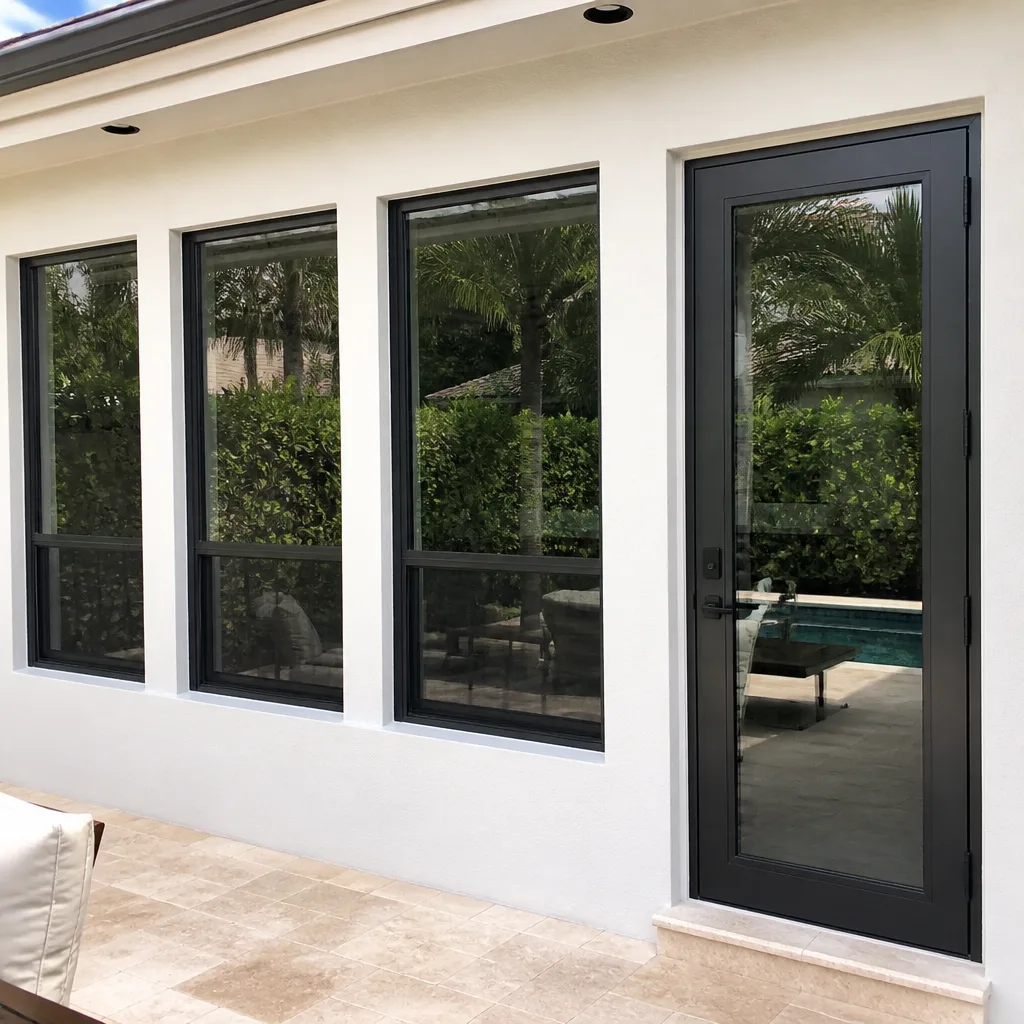 After
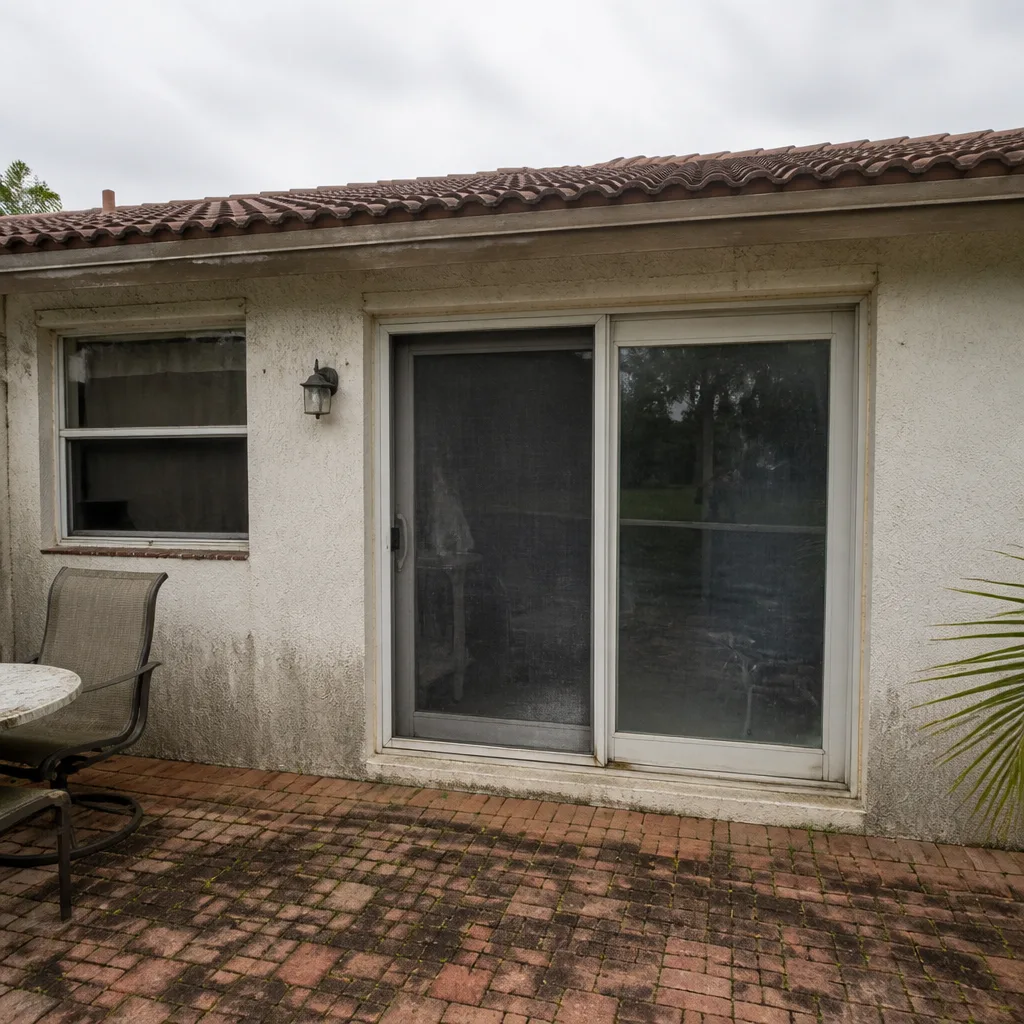 Before
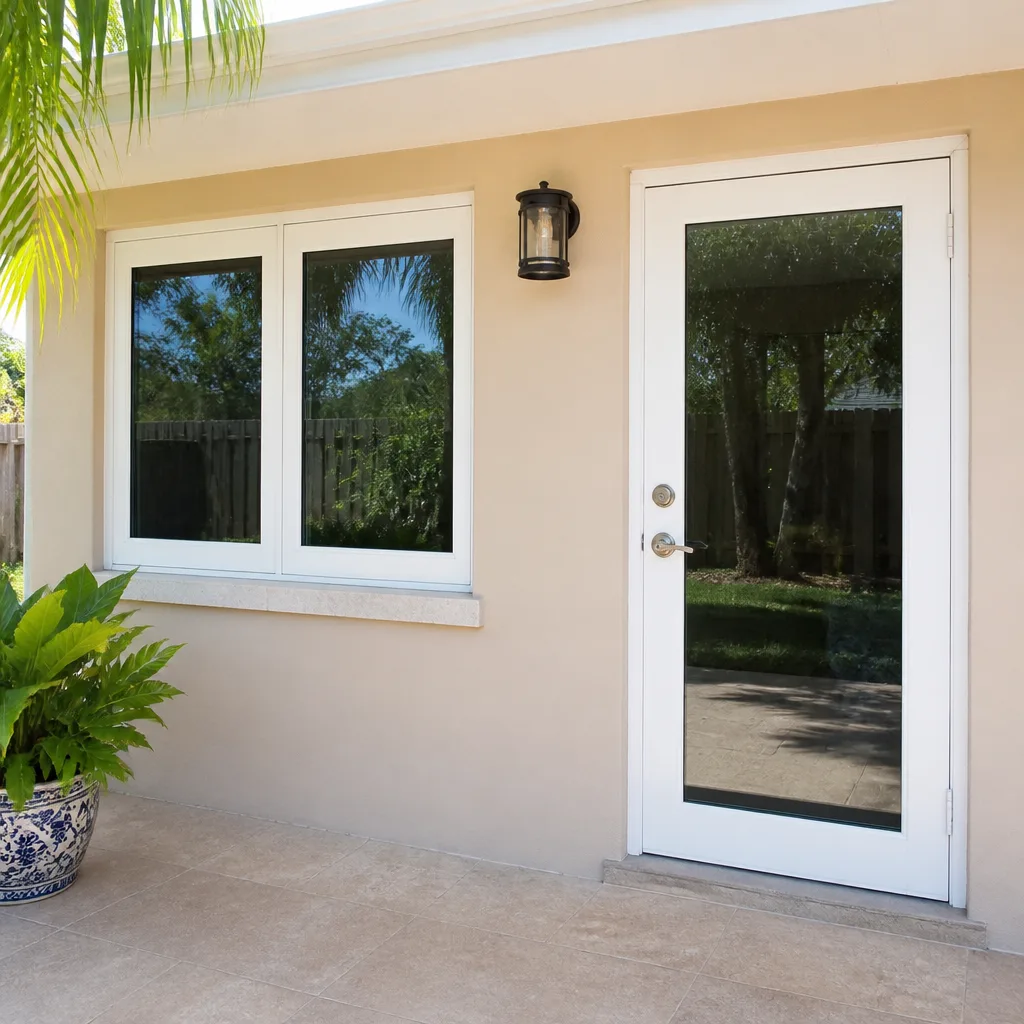 After
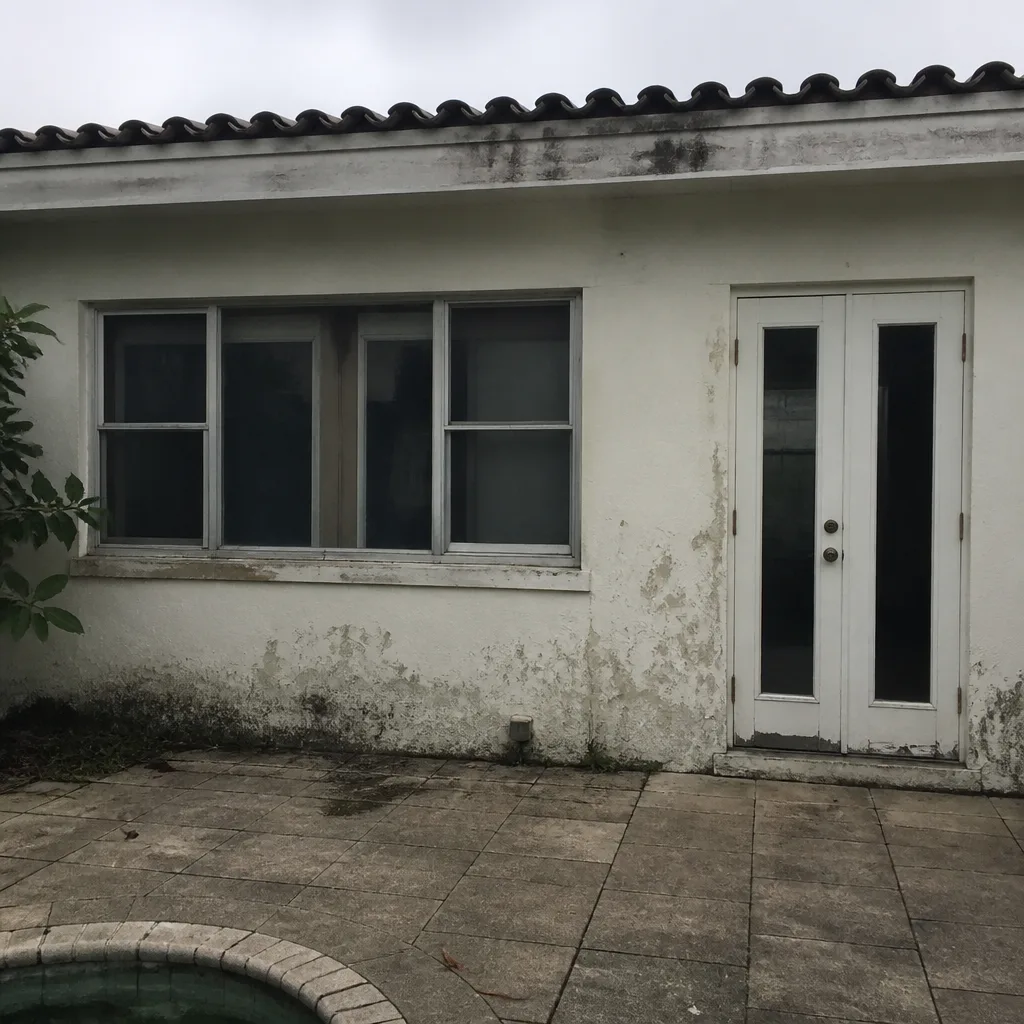 Before
 After
Windows & Doors Permits, Codes & Inspections in FL: What You Need to Know
Most Florida homeowners do not discover their window replacement needed a permit until the project is already underway, and the discovery is rarely pleasant. The Florida Building Code (FBC) governs window and door replacement with far more specificity than most people assume, and the rules change depending on whether your home sits in the High Velocity Hurricane Zone (HVHZ), which includes Broward County and Hollywood, or in the rest of the state. This guide walks through what actually matters: when a permit is required, what the code demands of a window or door, how inspections proceed, what all of it costs, and where Hollywood homeowners most often get tripped up. If you are planning a replacement, a repair, or a full remodel and want to avoid a stop-work order, a failed inspection, or a voided manufacturer warranty, read on.
Quick Answer
In Florida, any window or door replacement that changes the size of the opening or alters the structural framing requires a building permit, and in most municipalities within the HVHZ (including Hollywood), even a same-size window or door replacement requires a permit and product approval for wind and impact resistance. The work must meet Florida Building Code 7th Edition (2023) standards, pass inspection by a local building official, and in the HVHZ, windows and doors must meet Miami-Dade County product approval requirements. Costs, timelines, and exact requirements vary by municipality, but skipping the permit is never the cheap option: it risks fines, forced removal, insurance complications, and a failed resale inspection.
Table of Contents
- Who Needs a Permit for Windows & Doors in Florida
- What the Florida Building Code Says About Windows & Doors
- HVHZ vs. Non-HVHZ: Why Hollywood Is Different
- Product Approvals, NOAs, and Impact Ratings
- Permit Costs and What Adds Up
- The Inspection Process: What Gets Checked, Step by Step
- Common Mistakes to Avoid
- When to Call a Professional
- Frequently Asked Questions
- The Bottom Line
Who Needs a Permit for Windows & Doors in Florida
Florida law is direct on this point: the Florida Building Code, specifically Section 105.1 of the 7th Edition (2023), requires a permit for any work that involves “the removal, replacement, installation, or alteration of any structural component.” A window or door is a structural component of the building envelope, which means the default answer is that yes, a permit is required. The confusion comes from the exceptions.
The code carves out two limited exceptions. Minor repair work, defined as the replacement of glass, screens, hardware, or non-structural parts, does not require a permit. This covers things like replacing a fogged insulated glass unit, swapping a broken handle, or installing new weatherstripping. The second exception, found in some local amendments, allows a same-size, like-for-like replacement without structural alteration to proceed under a simplified process in certain non-HVHZ jurisdictions. But in Hollywood, where the High Velocity Hurricane Zone rules apply, that second exception effectively disappears for exterior openings.
The rule of thumb we give homeowners in Hollywood is this: if the unit coming out and the unit going in are the same size, the same type, and the existing frame remains intact, you may be eligible for a repair permit or a streamlined replacement review. If the opening changes size, if you are cutting into block or wood framing, if a mullion is being added or removed, or if the structural header is modified in any way, a full building permit is not optional. It is the first thing the inspector will ask about, and it is the easiest issue to catch on a resale inspection years later.
One more point that surprises people: the permit belongs to the homeowner or the contractor, and the responsibility for getting it right attaches to the person whose name is on the permit application. If you hire a contractor who tells you a permit is not needed for a full window replacement in Hollywood, get a second opinion from the City of Hollywood Building Division before any work begins. The cost of the phone call is five minutes. The cost of the contrary advice is measured in thousands.
What the Florida Building Code Says About Windows & Doors
Florida’s current code is the 7th Edition (2023), which took effect statewide on December 31, 2023. The code is updated on a three-year cycle, and with each cycle, the wind load, impact resistance, and energy efficiency requirements have grown stricter. The sections that matter for windows and doors are Chapter 16 (Structural Design), Chapter 17 (Special Inspections and Tests), and the residential-specific provisions of Chapter 6 of the Florida Building Code, Residential.
Three code requirements drive almost every window and door decision a homeowner in Hollywood faces:
- Wind load resistance. Every window and door must be engineered and tested to withstand the design wind pressures for its specific location. In Hollywood, those pressures are higher than almost anywhere else in the continental United States because of the city’s immediate coastal exposure. The required design pressure varies by opening size, building height, and proximity to the coast, but it is not a suggestion. A window with insufficient design pressure will fail both the product review and the field inspection.
- Impact resistance or shutter protection. The FBC requires that all exterior openings in wind-borne debris regions, which includes all of Hollywood and most of Broward County, be protected by either impact-resistant glazing (impact windows) or an approved shutter system. If a homeowner chooses non-impact windows with shutters, the shutters must be product-approved and installed to the same wind load standard. This is not an area where substitutions are permitted.
- Energy efficiency. Florida sits in Climate Zone 1 and 2, and the FBC energy provisions mandate specific Solar Heat Gain Coefficient (SHGC) and U-factor values for fenestration. In South Florida, the target is low SHGC to block solar heat gain and a moderate U-factor. The Department of Energy’s prescribed values for Zone 1 are a maximum SHGC of 0.25 and a maximum U-factor of 0.65 for most residential applications. Windows that fail these ratings will not pass the energy code review.
There is a reason Florida’s code documents run to thousands of pages. But for a homeowner, the relevant question is simpler: does the product have a valid Florida Product Approval or Miami-Dade NOA, and does the installation match the approved anchoring details? If the answer to both is yes, the code is largely satisfied. If either answer is uncertain, the next hurricane season will not be the only storm on the horizon.
HVHZ vs. Non-HVHZ: Why Hollywood Is Different
Florida is the only state that formally divides itself into two building code regimes based on hurricane risk. The High Velocity Hurricane Zone (HVHZ) covers Miami-Dade and Broward counties, including the entirety of Hollywood. The rest of the state operates under what is called the non-HVHZ or “rest of Florida” provisions. The difference is not academic. The HVHZ code is stricter, its product approval process is independent, and its enforcement is more aggressive.
The most consequential practical difference is in product approval. In the HVHZ, a window or door must carry a Notice of Acceptance (NOA) issued by Miami-Dade County, regardless of any Florida Product Approval (FPA) it may also hold. An NOA is not awarded lightly. It requires the manufacturer to submit the product to laboratory testing at elevated pressures, submit to factory audits, and provide detailed installation drawings showing exact anchoring requirements, fastener sizes, and spacing. The NOA includes specific installation details that are binding. A window installed with different anchors or at different spacing than the NOA specifies is a code violation, even if the window itself is approved.
In Hollywood specifically, the Building Division enforces a local amendment requiring that all replacement windows and doors in existing residential structures meet current code, not the code that was in effect when the home was built. This means a 1960s ranch house on Adams Street in central Hollywood must meet the same impact standards as a new construction home on Hollywood Beach. There is no grandfathering for wind protection.
The practical consequence of Hollywood’s HVHZ status is higher product costs and more exacting installation standards than homeowners in Orlando or Tampa face. Impact-rated windows and doors are fundamentally different products from standard insulated glass: the glass is laminated, the frames are reinforced, and the anchoring is heavier. When we replace windows in older Hollywood homes in the Lakes or the 441 corridor, the structural opening often needs reinforcing before the new unit goes in. That is not a line item invented to inflate the bid. It is what the NOA installation drawings require, and it is what the inspector checks.
Product Approvals, NOAs, and Impact Ratings
If you remember nothing else from this guide, remember this: in Hollywood, every window and door going into an exterior opening must have a current Miami-Dade NOA, and the installation must match the NOA installation drawings fastener for fastener. The NOA system was created after Hurricane Andrew exposed widespread failures in both products and installations, and it remains the most rigorous window and door product approval regime in the United States.
An NOA is specific to a manufacturer, a product line, and a set of size and configuration limits. It is not transferable. A Marvin double-hung that is approved at a maximum size of 48 inches by 72 inches cannot be installed at 50 inches by 74 inches under the same NOA. The installer must verify the exact product, exact size, and exact glass configuration against the current NOA before the order is placed. At TruePane, we check the NOA on every order before we ever cut an opening, because a window ordered to the wrong size under the wrong NOA has to be reordered, and a window installed under an expired NOA fails inspection.
Impact ratings are expressed in several terms that homeowners encounter but rarely decode:
- Design Pressure (DP). The measure of wind pressure in pounds per square foot that a window or door can withstand. For large or high openings near the coast in Hollywood, DP ratings of 50 to 70 psf and above are common. The required DP is calculated per opening, and the NOA lists the maximum DP for each approved size.
- Large Missile Impact (D). The test in which a 9-pound 2×4 is fired at the window at 34 mph. The window must resist penetration and then survive cyclic wind pressures. This is the standard for windows installed below 30 feet of height.
- Small Missile Impact (C). A test using small steel ball bearings fired at high velocity, applicable above 30 feet. Less relevant for most single-family Hollywood homes but common in mid-rise condominiums.
- PGT, CGI, ES Windows, Andersen, Marvin, Milgard, Jeld-Wen, and Simonton. These are all manufacturers we install and quote side by side on paper. Each maintains a catalog of NOAs. The choice among them should be made on the basis of the specific opening, the NOA limits, and the warranty, not brand loyalty. A brand that does not have an NOA for your exact opening size is not an option, no matter how well-regarded it is elsewhere.
The key takeaway is that product approval is the foundation of every code-compliant installation in Hollywood, and it is entirely possible for a contractor to install a perfectly good window that violates the NOA and fails inspection. The difference between a compliant install and a non-compliant one is in the details: the anchor type, the shim placement, the sealant joint, the fastener spacing. That is why the NOA installation drawings are the installer’s controlling document, not a suggestion.
Permit Costs and What Adds Up
Permit costs for window and door replacements in Florida are calculated on a valuation basis or a flat per-opening fee, depending on the municipality. In Hollywood, the City of Hollywood Building Division charges a permit fee tied to the project valuation, with minimum fees for small projects. For a typical single-family window replacement involving four to eight openings, homeowners should expect the permit itself to run between $150 and $500 for the building department fees alone. What adds up is everything else.
Here is a realistic breakdown of the non-product costs for a permitted window and door replacement project in Hollywood:
- Building permit fee. $150 to $500, depending on project valuation and number of openings.
- Plan review fee. Sometimes included, sometimes a separate line item. For engineered openings or structural alterations, expect $100 to $300.
- Product approval documentation. The installer must supply the NOA and installation drawings for each product. There is no separate city fee for this if the installer is organized, but some contractors charge a document preparation fee.
- Inspections. One or two inspections are typically required. Inspection fees are often bundled into the permit cost but may be itemized at $50 to $100 per inspection if the project requires re-inspections.
- Engineer letter, if required. For openings that are being enlarged, for second-floor installations with unusual structural conditions, or for older homes with deteriorated framing, a Florida-licensed engineer may need to review and stamp the installation details. That runs $300 to $800 and is not optional when the building official requires it.
- Notice of Commencement, if project exceeds $7,500. In Florida, any improvement with a total contract price over $7,500 requires a Notice of Commencement to be recorded before work begins. The recording fee is around $30 to $50 plus a small county surcharge, and most contractors include it in their fee. If your project is above that threshold and no Notice of Commencement was recorded, that is a red flag.
The permit itself is not the expensive part of the process for most Hollywood homeowners. What drives cost is the product: impact-rated windows and doors with current NOAs cost meaningfully more than standard units, and in the HVHZ, standard units are not an option. The second cost driver is installation labor done correctly: opening preparation, anchoring per the NOA, air and water sealing, and interior and exterior trim. That is where a low bid most often conceals its compromises.
We price every Hollywood project with a written, line-item quote before any work begins. The permit line is on it. The product line is on it. The installation labor is on it. There are no surprise line items on the bill, and no change order because the inspector caught something we should have caught before the truck arrived. That is the square deal, and it is the only way we work.
The Inspection Process: What Gets Checked, Step by Step
The inspection sequence for a permitted window and door project in Hollywood follows a predictable path, and knowing the sequence removes most of the anxiety from the process. Here is what happens, in order:
- Permit issuance. The contractor or homeowner files the permit application with the City of Hollywood Building Division, submits the product approvals and installation drawings if required, and pays the fee. The permit is issued when the application is approved.
- Opening preparation (framing inspection, if triggered). If any structural work is involved, including header replacement, opening enlargement, or anchor embedment into masonry or concrete, the building official may require an inspection before the new window or door is installed. The inspector verifies that the opening dimensions match the permitted plans, the framing is sound, and the structural work is correct.
- Product verification at installation. The installer checks the product label against the NOA, confirms the size and glass configuration, and installs the unit per the NOA installation drawings. In our company, this is the step where the pane being true is most literal: the unit must be plumb, level, and square in the opening, with the anchor pattern matching the drawings exactly. If the pane is not true, the job is not done, and we do not proceed to the next step until it is correct.
- First inspection (if required). In Hollywood, the typical window and door replacement triggers a single final inspection, but larger projects may call for a rough inspection at the anchor stage and a final inspection after sealant and trim. The inspector verifies anchoring, flashing, water resistance, and product compliance.
- Final inspection. The inspector confirms that the installed products match the permit, the anchor pattern matches the NOA, the flashing and sealant are correct, and the work area is safe. A passing final inspection closes the permit and produces the certificate of completion.
- Warranty registration. This step is not handled by the city, but it should happen before the installer leaves the driveway. Both manufacturer warranty layers, the product warranty and the installation or labor warranty, must be registered in writing. At TruePane, this is The Keystone Standard: both warranty layers registered in writing, with the durations stated, before the technician leaves the driveway. The Done Right Promise sits on top of that. If it is not done right, we make it right, no paperwork fight and no arguing.
One point worth emphasizing about Hollywood inspections: the inspectors are thorough, and they have seen every shortcut. A sealant joint that is too thin, an anchor pattern that does not match the NOA, a flashing detail that was skipped because it was inconvenient, these failures are common and they are always caught. The calmest inspections we have are the ones where the work is done to the drawings from the first cut. That is what 42 years of doing this work teaches you: the inspector is not the adversary. The drawing is the standard, and the inspector is just checking the work against it.
Common Mistakes to Avoid
We see the same mistakes repeated across Hollywood, from the Lakes to Emerald Hills to Hollywood Beach, and they are almost all avoidable with attention and patience. The seven most common, in no particular order:
- Skipping the permit on a same-size replacement. In the HVHZ, even a same-size replacement is a code-governed installation. Homeowners who skip the permit to save $200 find the savings minuscule when the work fails a resale inspection or the insurance carrier asks for the permit number after a storm.
- Buying a window with no Florida Product Approval or Miami-Dade NOA. A window purchased from a big-box store with a sticker that says “hurricane rated” is not necessarily acceptable in Hollywood. If there is no current NOA for the exact product and size, the inspector will fail it, and the return process will eat the savings several times over.
- Hiring a contractor who does not pull the permit. The permit identifies the responsible party. If the contractor’s name is not on the permit, the homeowner may be left holding the compliance problem after the contractor is gone. In Florida, unpermitted work discovered during a sale or insurance claim becomes the homeowner’s problem to fix.
- Ignoring the NOA installation drawings. The NOA is not just a product approval. It is a binding installation specification. Different anchor types, fewer fasteners, or different spacing than the drawings require will fail inspection. This is the single most common cause of failed window inspections in Hollywood.
- Choosing the cheapest impact window that fits. Impact windows are a long-term investment in a house you intend to stay in. The cheapest product with a valid NOA often has a shorter warranty, thinner frames, and no service network. We quote manufacturer lines side by side on paper so a homeowner sees exactly what they are buying, including the warranty durations. Marvin, Milgard, Jeld-Wen, Simonton, and the other lines we carry are not all the same, and the differences matter over twenty years in the Florida heat and salt air.
- Assuming the old window was installed to code. Older Hollywood homes frequently have windows that were never permitted or were installed to a code edition long since superseded. The opening may need structural repair, rot remediation, or resizing before the new unit goes in. A contractor who quotes sight unseen without checking the existing conditions is guessing, and the guess will become a change order.
- Forgetting the Notice of Commencement. On any project above $7,500, Florida law requires a recorded Notice of Commencement before work begins. It protects the homeowner from lien claims by unpaid subcontractors or suppliers. Forgetting it is a purely administrative failure with real financial exposure.
Every one of these mistakes shares a root cause: the push to get the job done fast and cheap rather than right. In the HVHZ, the building envelope is not a place for shortcuts. It is the line between a comfortable home and a flooded, wind-damaged one, and the building code is written the way it is because people have learned that lesson the hard way.
When to Call a Professional
There are window and door projects a careful homeowner can handle alone, and there are projects where a professional is the only responsible choice. Replacing a worn sweep on an exterior door is within reach. Reglazing a small single-pane window in a shed is within reach. Replacing an exterior window or door in a Hollywood home is not, for three reasons that compound each other.
First, the HVHZ code and NOA requirements are relentless in their specificity, and they are not forgiving of improvisation. Second, the physical work of removing an impact window or a heavy sliding glass door and setting the new unit true, plumb, and correctly anchored is skilled labor, and the failure mode is a leak that rots framing behind the wall for years before anyone notices. Third, the warranties that matter, the manufacturer’s product warranty and the installation labor warranty, are only enforceable when the installation is performed by an authorized installer and registered in writing. A DIY install voids the product warranty, which means a failed unit becomes an out-of-pocket replacement.
TruePane Windows & Doors serves Hollywood and the surrounding communities with permitted, inspected, code-compliant window and door replacement and installation. We offer free estimates in Hollywood, and a live person answers the phone 24 hours a day, 7 days a week. For an estimate, call (863) 334-2933.
Frequently Asked Questions
Yes. In Hollywood, which sits within the High Velocity Hurricane Zone, a same-size window replacement is a code-governed installation that requires a permit, product approval, and inspection. The narrow exceptions in the Florida Building Code apply to minor repairs such as glass replacement, not to full unit replacement. Call (863) 334-2933 and we can walk you through the exact process for your project.
The HVHZ covers Miami-Dade and Broward counties and imposes stricter product approval (Miami-Dade NOA), wind load, and impact resistance requirements than the rest of Florida. A window approved for use in Tampa may not be legal in Hollywood. We quote manufacturer lines side by side on paper so you can see exactly which products carry a valid NOA for your opening.
A window and door permit in Hollywood typically costs $150 to $500 in building department fees, depending on project valuation and the number of openings. Additional costs may include plan review, an engineer letter for structural work, and a Notice of Commencement recording fee on projects over $7,500. The exact figures are line items in the written quote we provide before any work begins.
Not automatically. A window must carry a current Miami-Dade NOA for the exact product, size, and configuration to be installed in Hollywood. Some products marketed as hurricane-rated do not hold the required NOA and will fail inspection. This is why we verify the NOA on every order before the unit is purchased.
In most cases, no. Manufacturer warranties require installation by an authorized installer, and many explicitly exclude DIY installations. Beyond the warranty, a DIY window installation in the HVHZ is unlikely to meet the NOA anchoring requirements and will fail inspection. At TruePane, we register both warranty layers in writing before the technician leaves the driveway, so there is no ambiguity about what is covered and for how long.
Unpermitted window and door work is one of the most common findings on a four-point inspection or a seller’s disclosure review in Hollywood. The buyer’s lender or insurer may require the work to be permitted and inspected retroactively, or the deal may fail entirely. The cost of retroactive permitting and remediation is typically several times the cost of pulling the permit at the start of the project. For an honest assessment of a specific situation, call us at (863) 334-2933 and we will help you understand the path forward.
The Bottom Line
Window and door projects in Hollywood run on a simple logic: the code, the NOA, and the inspection are the same document, read three ways. A product with a valid Miami-Dade NOA, installed to the NOA’s anchoring drawings, with a permit from the City of Hollywood and a passing inspection, is a project that is defensible for decades. Skip any one of those steps, and the savings are borrowed against the resale price, the insurance claim, and the storm you hope never comes.
For homeowners in Hollywood who want the work done right the first time, TruePane Windows & Doors offers free estimates, written line-item pricing, and a live person on the phone 24 hours a day. Call (863) 334-2933 to schedule your free estimate. A square deal, in writing, from a company that has been serving local communities and plans to be here for the next thirty.
Written by the team at TruePane Windows & Doors.
Six Reasons Homeowners Choose TruePane Windows & Doors
Impact systems engineered to design pressures up to +/-100, matched to your wind zone - your openings hold when the storm arrives.
Low-E insulated impact glass from our manufacturer lines commonly cuts monthly cooling bills 20-30%.
Laminated impact glass shuts out up to 40% of outside noise - traffic, neighbors, weather.
Monitoring services run $30-90 a month. Laminated impact glass resists forced entry around the clock, with no subscription.
Florida homeowners average around 25% savings on the windstorm portion of their policy after protecting every opening - some homes qualify for more.
A full impact package upgrades curb appeal, buyer confidence and appraised value in one project.